I’ve run this bike hard—track, canyons, B-roads, hot days, dirty apexes. So this review isn’t about what could work. It’s about what does. If the tyre can’t stay composed at trail-brake pressure or starts stepping out mid-corner when the torque hits, it’s dead to me.
Ducati Panigale 959 Tyre Guide
Sudarshan KV
May 9, 2025
4 MIN READ
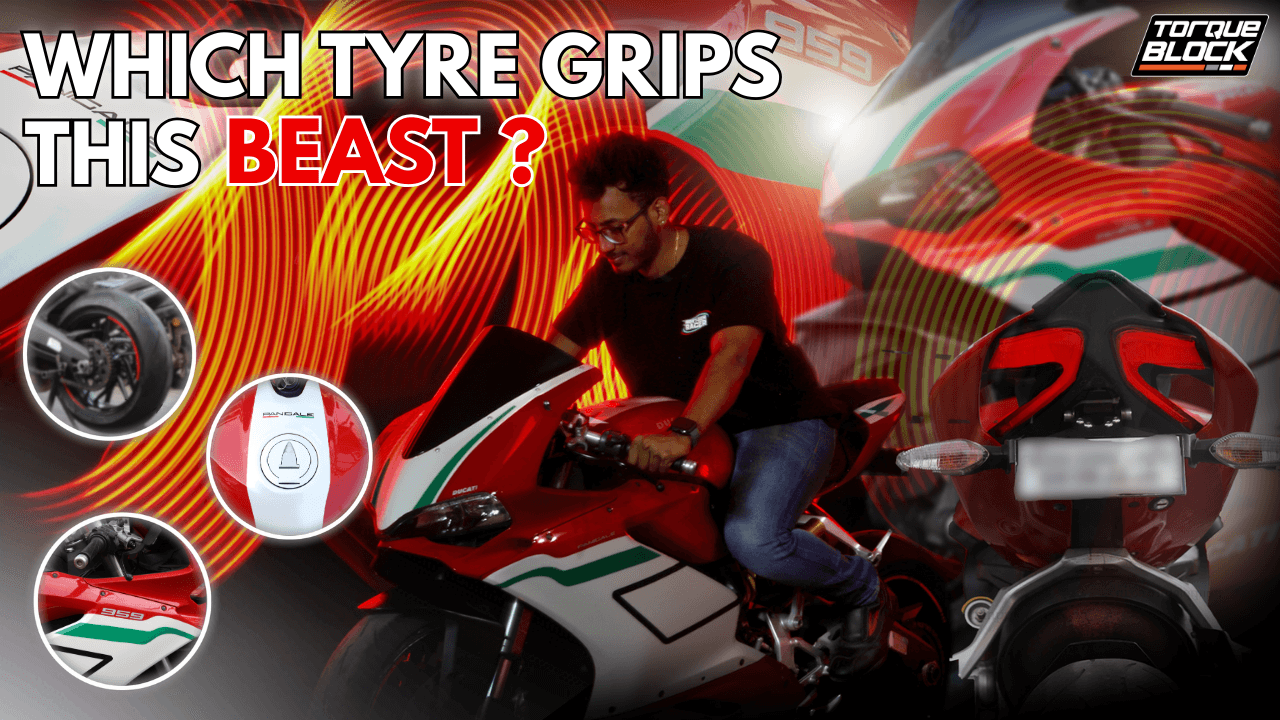
"Let’s get this straight: the Ducati Panigale 959 isn’t for the half-committed. It’s a purpose-built, midweight supersport with a chassis that talks, a motor that punches from the basement, and front-end geometry sharp enough to sniff out hesitation in your setup."
Let’s get this straight: the Ducati Panigale 959 isn’t for the half-committed. It’s a purpose-built, midweight supersport with a chassis that talks, a motor that punches from the basement, and front-end geometry sharp enough to sniff out hesitation in your setup. If you don’t know what your tyres are doing at lean or under load, you’re already behind.
I’ve run this bike hard—track, canyons, B-roads, hot days, dirty apexes. So this review isn’t about what could work. It’s about what does. If the tyre can’t stay composed at trail-brake pressure or starts stepping out mid-corner when the torque hits, it’s dead to me.
Here’s what passed the test.
Profile: Aggressive tip-in, holds a neutral line without constant rider input
Compound: Dual front, triple rear—slick shoulders that don’t give up grip after heat cycling
Carcass Behavior: Stable under front load; doesn’t fold even with high brake torque
For Who: Riders who attack fast road sections or enter local trackdays without tire warmers
Downside: Can overheat under full-length sessions if your pressures aren’t dialed
Profile: Slightly slower turn-in than the Rosso IV Corsa, but ultra-planted at lean
Compound: Street-legal slick; negligible tread = maximum contact patch
Carcass Behavior: Track-grade firmness; feedback sharp enough to read surface grain
For Who: Advanced riders with consistent pace; thrives on heat and commitment
Downside: Weak cold grip. Needs warmers or aggressive warm-up laps
Profile: Balanced and forgiving; transitions smoothly through lean without spiking response
Compound: Medium-soft rubber that holds its grip through surface inconsistencies
Carcass Behavior: Slightly softer than Pirelli or Michelin—absorbs small bumps better
For Who: Fast road riders who occasionally push at the track
Downside: Not as crisp under full lean as the others—but the tradeoff is comfort and control
Track and fast road mix: Rosso IV Corsa
Full send, hot laps: Michelin Power Cup 2
Everyday aggression with real-world forgiveness: Racetec RR K3
I’ve run this bike hard—track, canyons, B-roads, hot days, dirty apexes. So this review isn’t about what could work. It’s about what does. If the tyre can’t stay composed at trail-brake pressure or starts stepping out mid-corner when the torque hits, it’s dead to me.